Author: vparunak

  • Gen 3:16 and God’s Pattern for the Family

    Some Bible teachers understand the last two clauses of Gen 3:16 as defining how families should operate.


    Gen 3:16 I will greatly multiply thy sorrow and thy conception; in sorrow thou shalt bring forth children; and thy desire shall be to thy husband, and he shall rule over thee.

    According to this position, the woman is to be emotionally dependent on her husband, submissively desiring him. He is to rule over her and his home like a little king in his castle. The verse is sometimes viewed as the basis for NT passages on the different roles of the husband and the wife (Eph 5:22-33; Col 3:18-19; and 1 Pet 3:1-7).

    In fact, Gen 3:16 is not instruction on how families are to operate, but a description of how fallen people live in vicious tension. In the gospels, the Lord Jesus actually forbids this pattern of life.

    (more…)
  • The Righteousness of God

    Paul repeatedly describes our salvation as the imputation to us of “the righteousness of God.” We often think of this as a distinctively New Testament doctrine, but (as usually turns out to be the case) Paul is drawing on a teaching that is well developed in the Old Testament.

    (more…)
  • Moses Learns the Names of God

    In the Old Testament, a person’s name is not just a label, but a description of who they are. God often changes the names of individuals when they experience significant spiritual events. So we should pay special attention to the names of God in the Bible. In the book of Exodus, Moses is exposed to three names of God, which trace the development of Israel’s knowledge of God through three steps. The third name presents a vision that extends to the redemptive work of the Lord Jesus.

    (more…)
  • How the Bible Grew

    Roman Catholics disagree with NT believers over the composition of the Bible. At least two questions are involved:

    1. Which books belong in the Bible? The RC Bible has the same NT that believers use, but includes seven additional books in the Old Testament (Tobit, Judith, 1 and 2 Maccabees, Wisdom of Solomon, Sirach, and Baruch), as well as some additions to Esther and Daniel.
    2. What authority defines the correct set of books? Rome claims that it established the set of inspired books, originally at the Council of Rome in AD 382, and confirmed at subsequent councils (Hippo in 393, Carthage in 397 and 419, Florence in 1442), culminating in the Council of Trent in 1546.

    I wrote this paper in 1974 on the first question, which contains many helpful details. This post adds a few observatons on the second question.

    (more…)
  • Eat My Flesh, Drink My Blood

    (Please start reading with the lead post in this series.)

    The words of the Lord Jesus in John 6:41-59 are often cited in discussions of the Lord’s Supper, in seeking to understand the true nature of the bread and the cup. In particular,

    Jhn 6:53 Then Jesus said unto them, Verily, verily, I say unto you, Except ye eat the flesh of the Son of man, and drink his blood, ye have no life in you. 54 Whoso eateth my flesh, and drinketh my blood, hath eternal life; and I will raise him up at the last day. 55 For my flesh is meat indeed, and my blood is drink indeed. 56 He that eateth my flesh, and drinketh my blood, dwelleth in me, and I in him.

    This paper discusses John 6 in detail. It makes the following points:

    • John 6:22-71 is not a single “bread of life discourse,” but three separate discourses, addressed to three different groups, and probably in different locations.
    • The verses in question are addressed to “the Jews,” whom the chapter compares to the murmuring Israelites during Israel’s 40 years in the wilderness.
    • It is not describing the last supper, which still lay a full year in the future, but rather is commenting on the miraculous multiplication of the loaves and fishes in the first part of the chapter.
    • In the first discourse, to the multitudes, the Lord sets forth much simpler conditions to receive eternal life, and in the third discourse, to the disciples, the Lord directs attention away from his physical flesh and toward his words.
    • The language used with the Jews in 6:41-59, like the Lord’s teaching in Matthew 13, is symbolic and parabolic, and intended to confuse those who have already rejected his simpler statements.
  • This Is My Body

    (Please start with the lead post in this series.)

    The night in which he was delivered up as a sacrifice for our sins, the Lord Jesus instituted a simple ceremony that almost all groups who claim to be Christian follow in some form. His words in instituting this ceremony are preserved in Matt 26:26-28, Mark 14:22-24, Luke 22:19-20, and 1Cor 11:23-25. First he breaks bread and shares it with the disciples, saying, “this is my body, which is given for you.” Then, after a delay recorded in Luke and 1 Corinthians, he passes them a cup of wine, saying, “this is my blood of the new covenant, which is shed for you and for many.”

    These expressions have been the object of disagreement for centuries. For some, they demonstrate that the bread and wine are in reality the body and blood of Christ. For others, they simply claim that the elements are symbols that represent the Lord’s body and blood.

    This note looks at the semantics of “this is that” statements in the Bible, in the light of the difference between Indo-European idioms (including Greek, Latin, and English) and Semitic idioms (specifically, Hebrew).

    (more…)
  • The Bread and Wine

    Almost every group that calls itself “Christian” performs a ceremony that recalls the Last Supper shared by the Lord Jesus and his disciples. They remember his words in instituting this ceremony, preserved in Matt 26:26-28, Mark 14:22-24, Luke 22:19-20, and 1Cor 11:23-25. First he broke bread and shared it with the disciples, saying, “This is my body, which is broken for you.” Then, after a delay recorded in Luke and 1 Corinthians, he passed his disciples a cup of wine, saying, “this is my blood of the new covenant, which is shed for you and for many.” So those who seek to follow him share a morsel of bread, and a swallow of wine or grape juice, remembering that his body was broken and his blood poured out for their sin. As Paul said in explaining the ceremony, ”Ye do shew the Lord’s death until he come” (1 Cor 11:26).

    (more…)
  • The Antiquity of Pagan Christianity

    Some “Christian” groups have features that are not attested in the New Testament, such as prayers to the Mother of God and to deceased people, professional priests who offer sacrifice, purgatory, sacramental actions that make a person a member of the community, an obligation on members to contribute financially to the organization, and ornate meeting places adorned with images. They justify such features on the basis of their antiquity. We need to understand two things about this state of affairs.

    First, these features are indeed ancient. They all go back, not just to the church fathers, but to the oriental Mystery Religions (such as the cults of Demeter and Persephone, Mithra, Orpheus, Cybele, Isis, Serapis, Attis, and others) that were already part of Roman culture in the third and second centuries BC.

    Second, the NT recognizes the danger of confusing these cults with the true faith. Many of their features anticipate Christianity (e.g., the need for salvation from sin and the promise of eternal life). But the NT commands believers to separate from them.

    (more…)
  • Is the Bible open or closed?

    A common question among those who call themselves “Christian” is whether the Bible is open or closed. Does the Bible contains all the truth that God wants us to know and follow, or do we need to look elsewhere as well? There are two facets to the question. The first concerns the books that are included in the Bible itself. Are they a fixed set for all time, or could more be added later? The second concerns how believers should respond to the Bible that they have at a given time. Should they simply quote the Bible to each other, or are there other teachings that they should consider alongside it?

    The answer to both questions is the same: the Bible is open, not closed–but it contains clear guidelines that regulate the additional material that we should consider.

    (more…)
  • The Subtle Idolatry of Fear

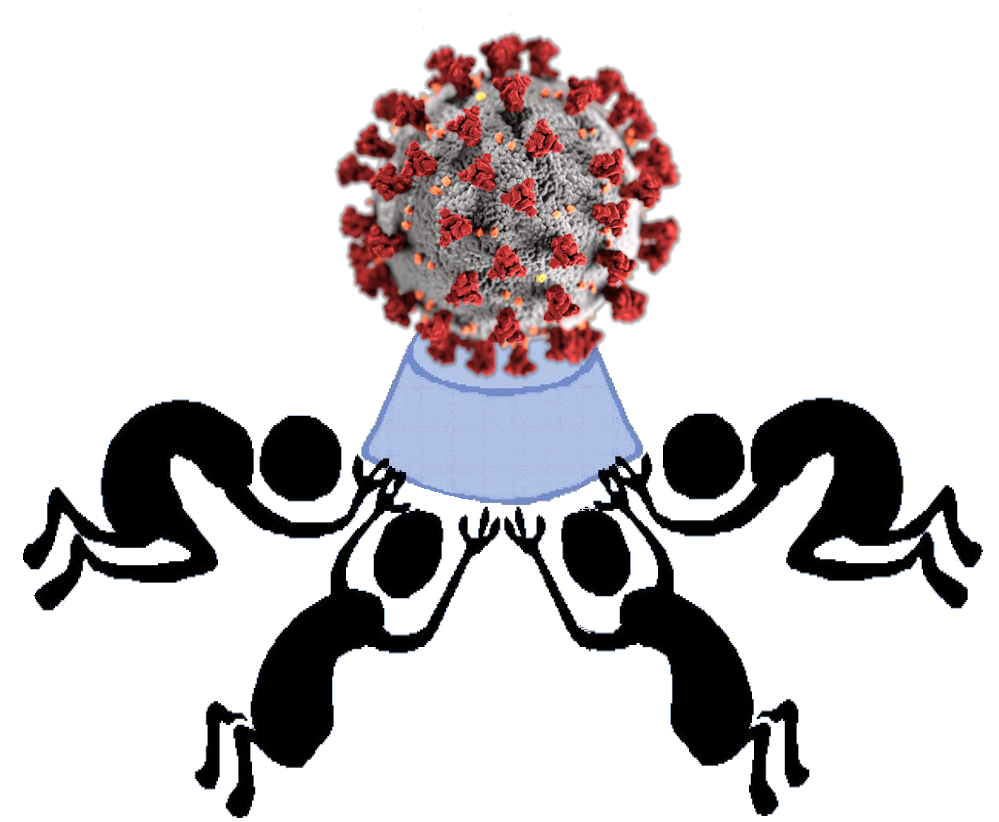
    Image components from https://www.tes.com/lessons/gjVAOOheTxotYw and https://phil.cdc.gov/Details.aspx?pid=23312

    Our generation is dominated by fear. Many people are obsessed with fear of contracting COVID-19. Each side in our fractured political system loudly announces what we have to fear if the other side is in power. Even prosperity brings fear, as we become addicted to newfound comforts, and fear that we might lose them.

    Such fear is wrong. God’s word teaches that whatever we fear, we worship. If we fear COVID-19, or the Republicans, or the Democrats, or an economic collapse, or anything other than the true God, we are idolaters. We must fear God, but if we fear anyone or anything else, we are worshipping a false God.

    (more…)